

 Technically Reviewed ~TANYA TOMAR
 Imagine a summer afternoon inside a commercial greenhouse growing tomatoes or capsicums.
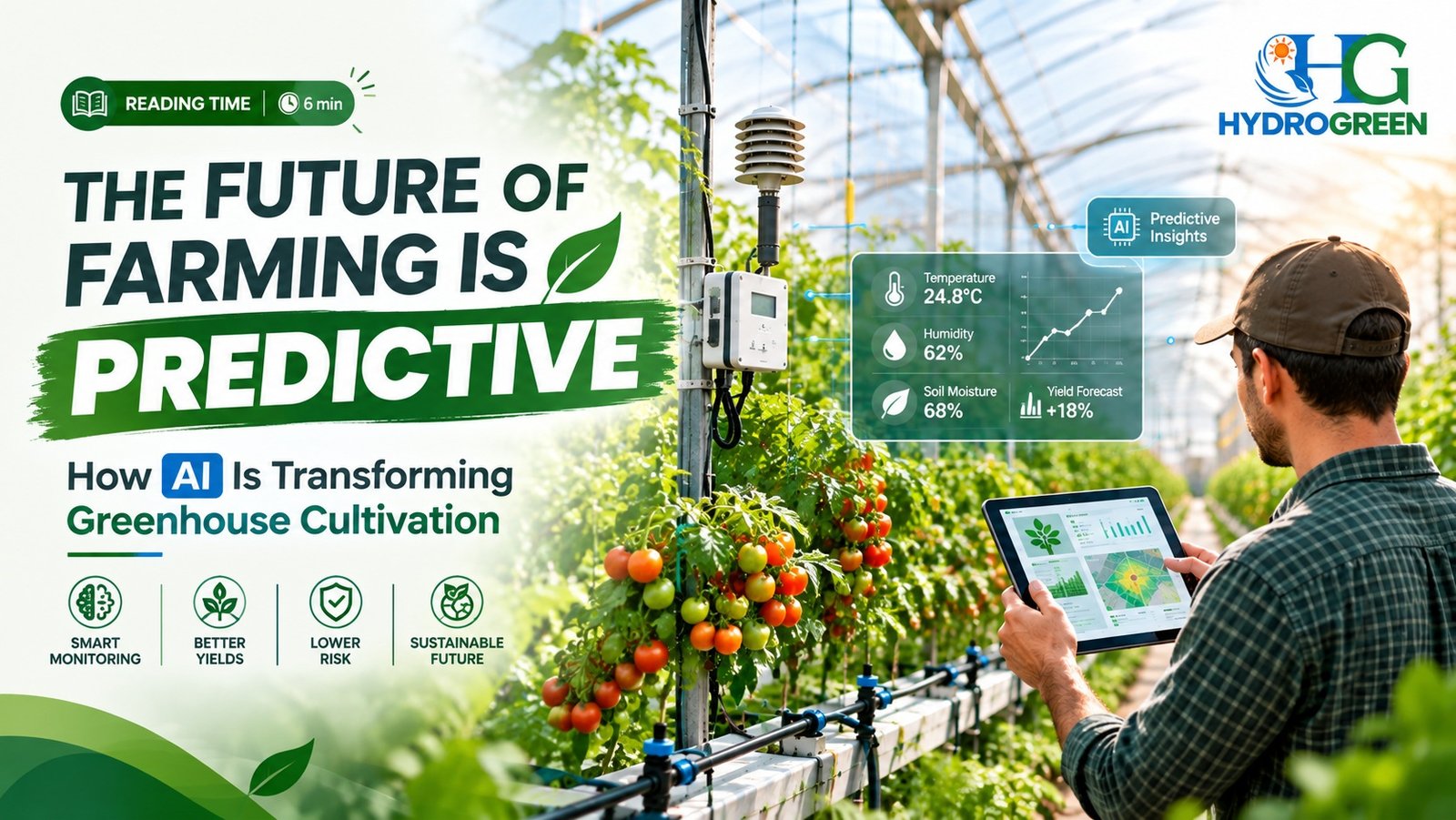
The outside temperature is rising. Humidity is changing. Plants are transpiring more rapidly, and irrigation requirements may soon increase. The grower is busy inspecting another section of the farm and has not yet noticed the developing stress. A conventional monitoring system may display the current temperature and humidity. A predictive system could go further by analysing recent sensor readings, weather forecasts and historical greenhouse behaviour to estimate whether conditions are likely to move outside the desired operating range.
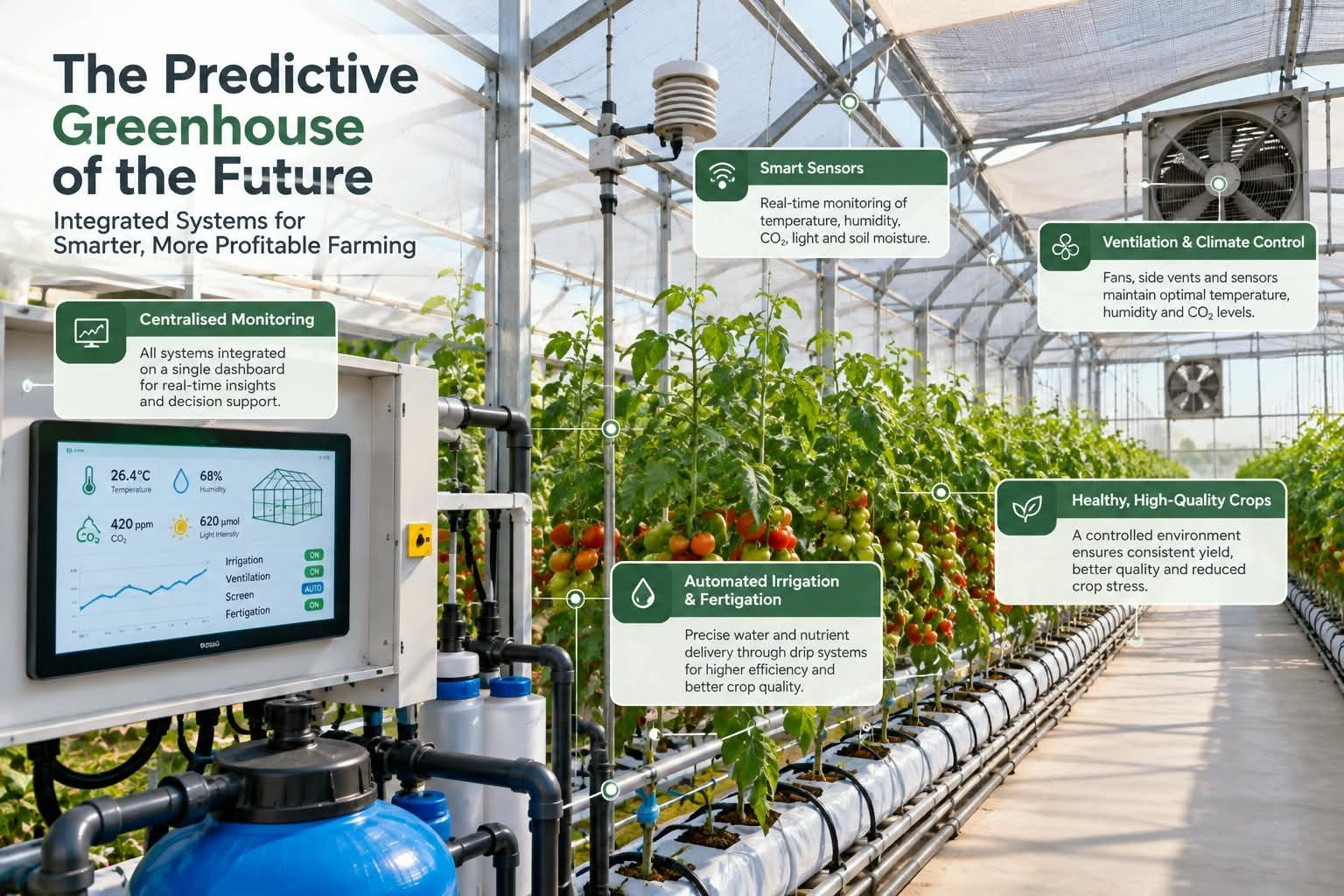
This is where AI in greenhouse farming is creating new possibilities for protected cultivation. By analysing sensor data, weather information, crop records and historical greenhouse performance, artificial intelligence can help growers interpret complex conditions, identify patterns and make better-informed decisions about climate, irrigation, crop health and harvesting. Monitoring tells you what is happening. Prediction estimates what may happen next. Decision support helps you determine what to do about it However, AI is not a replacement for good greenhouse engineering or agricultural expertise. Its effectiveness depends on reliable sensors, suitable infrastructure, accurate data and practical implementation.
In modern agriculture, the real opportunity is to combine technology with crop knowledge and project-level planning.
Greenhouse cultivation provides greater control over the crop environment than many open-field systems. However, conditions inside a greenhouse continue to change throughout the day. Temperature, solar radiation, humidity, water availability, crop growth and disease pressure interact continuously. Farmers must manage these variables while controlling labour, energy, fertiliser and other operating expenses.
| Management area | Conventional approach | Predictive approach |
|---|---|---|
| Climate management | Responds to current temperature and humidity | Estimates future environmental changes |
| Irrigation | Follows fixed schedules or manual observations | Uses sensor data and crop-demand estimates |
| Crop health | Relies heavily on routine visual inspection | Supports inspection through image analysis and risk alerts |
| Yield planning | Uses experience and historical production | Combines crop records and current observations to estimate output |
| Resource management | Reviews consumption after use | Identifies patterns and potential inefficiencies |
| Decision-making | Primarily reactive | More data-informed and potentially proactive |
Predictive systems do not eliminate uncertainty. They help growers recognise potential risks earlier and respond with better information.
An AI-enabled greenhouse combines data collection, analysis and decision-making. Depending on the system, it may also connect to automated equipment.
| Stage | Technology or process | Purpose |
|---|---|---|
| 1. Data collection | Temperature, humidity, light, moisture and other sensors | Measures current growing conditions |
| 2. Data integration | Controllers, software platforms and historical records | Organises information from different sources |
| 3. Prediction and analysis | Machine-learning models and analytical algorithms | Identifies patterns and estimates possible future conditions |
| 4. Action | Alerts, recommendations or automated controls | Helps growers respond to identified risks |
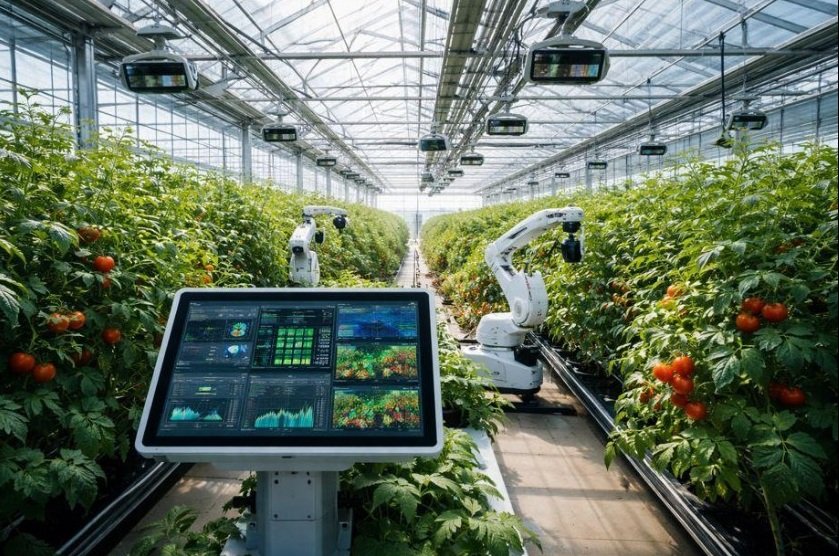 Depending on the crop and growing system, sensors may monitor:
Sensor selection should depend on the actual cultivation requirements rather than the number of devices installed.
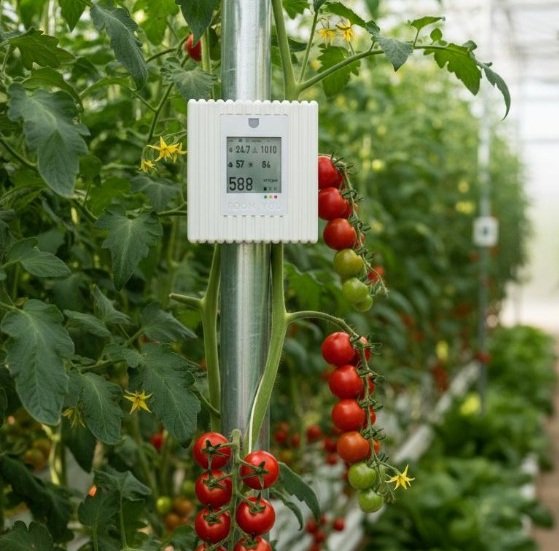
The collected information can be combined with:
This creates a more complete picture of the greenhouse.
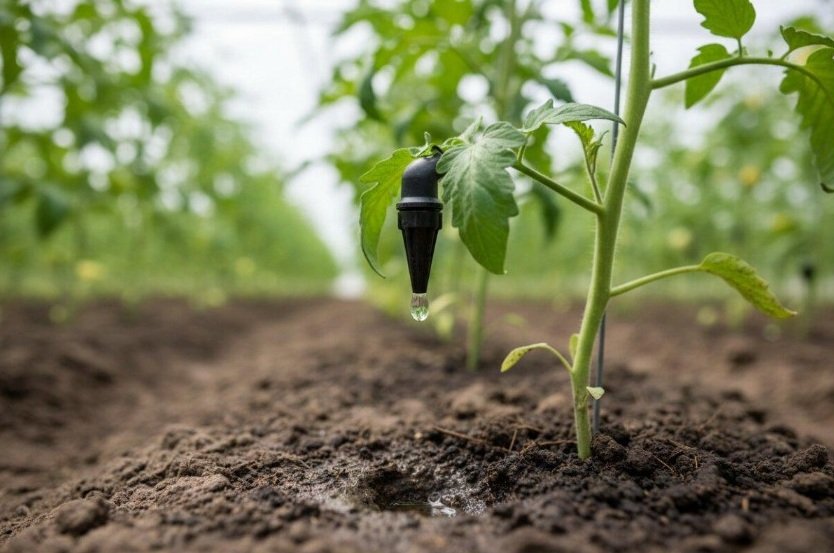
AI models can analyse patterns in the available data to estimate future conditions, identify unusual readings or support operational recommendations.
For example, a model may identify that temperature tends to rise rapidly under a particular combination of outside weather, solar radiation and ventilation conditions.
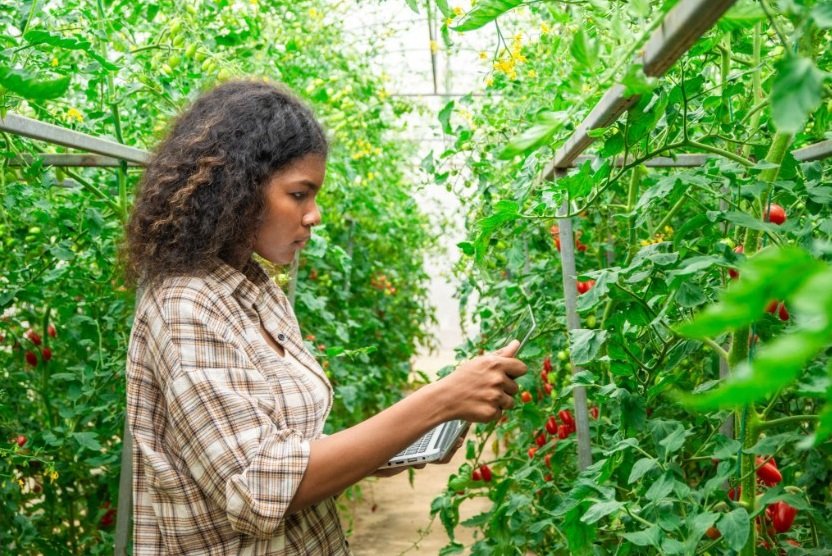
The resulting information can be used to:
Automated action requires compatible equipment, properly configured controls and appropriate safety mechanisms. Not every AI-enabled monitoring platform is connected to greenhouse control equipment.
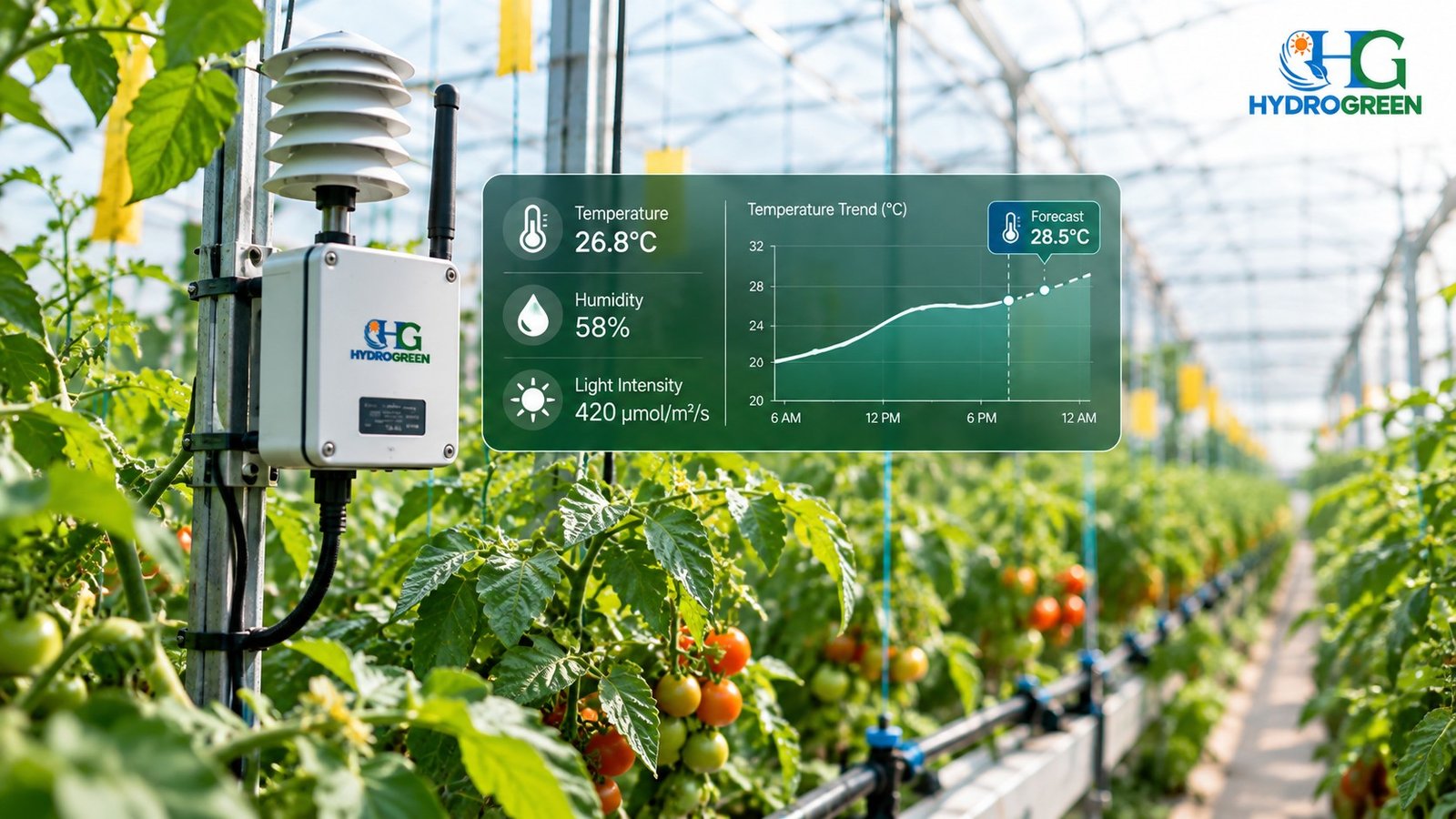
Temperature, humidity, light and ventilation influence crop growth and water demand.
Traditional systems may use preset thresholds to trigger equipment. Predictive climate management attempts to anticipate how conditions will change.
Practical applications include:
Example: If weather forecasts indicate an approaching period of extreme heat, a predictive system may help the grower prepare the greenhouse before conditions become stressful.
However, software cannot compensate for inadequate ventilation, an unsuitable structure or insufficient cooling capacity. The physical system must be correctly designed first.
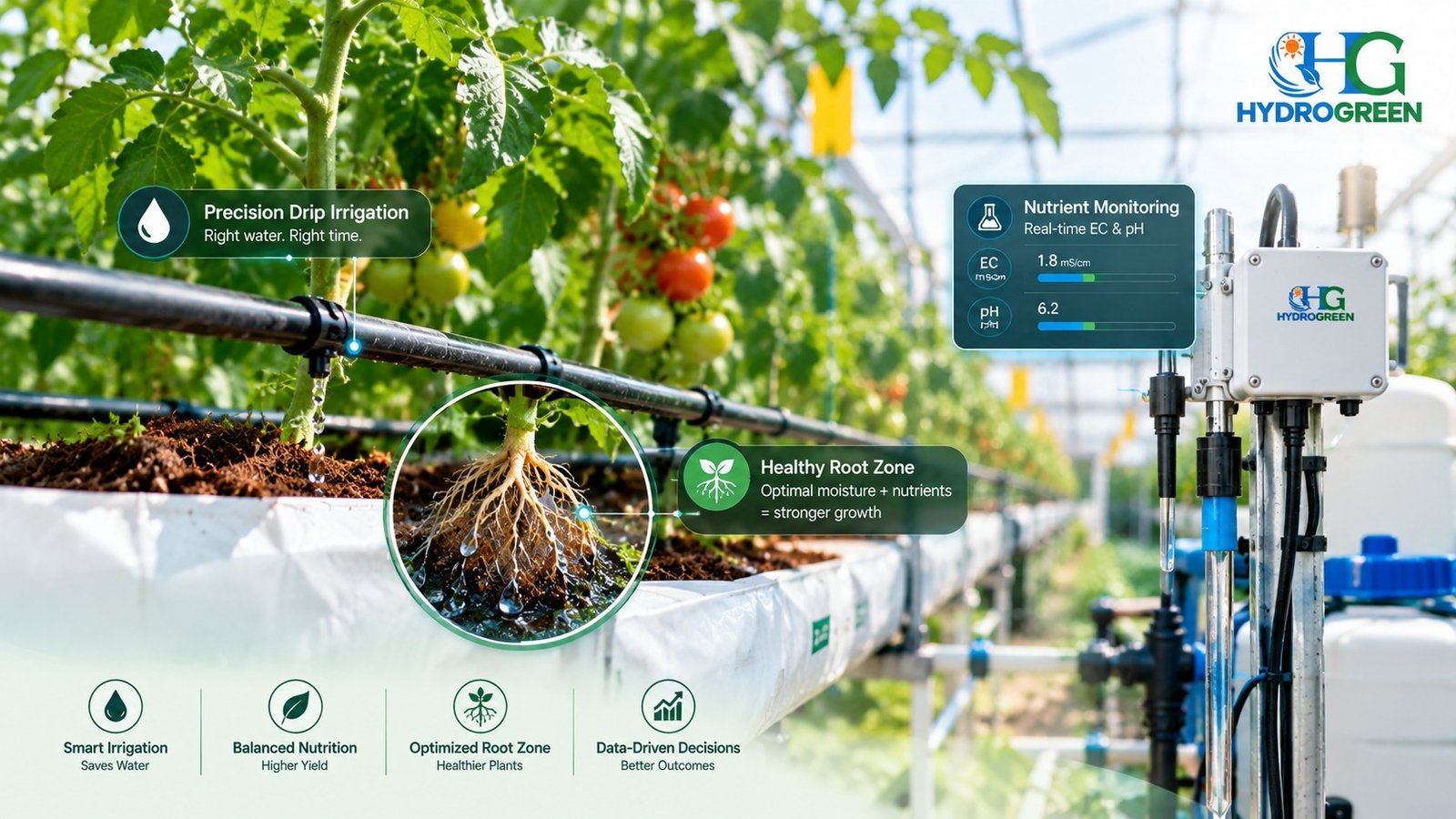
Water and nutrient management are among the most practical areas for data-driven cultivation.
A fixed irrigation schedule may not always reflect changes in sunlight, crop size, growing media and plant water demand.
AI-supported irrigation systems may use sensor measurements and historical patterns to help estimate irrigation requirements.
Potential benefits include:
In soilless cultivation, pH and EC measurements can provide additional information about nutrient-solution conditions.
These readings must be interpreted according to crop requirements, water quality, growing media and drainage behaviour.
The objective is not simply to reduce water use. It is to supply the appropriate amount at the right time while avoiding unnecessary application and plant stress.
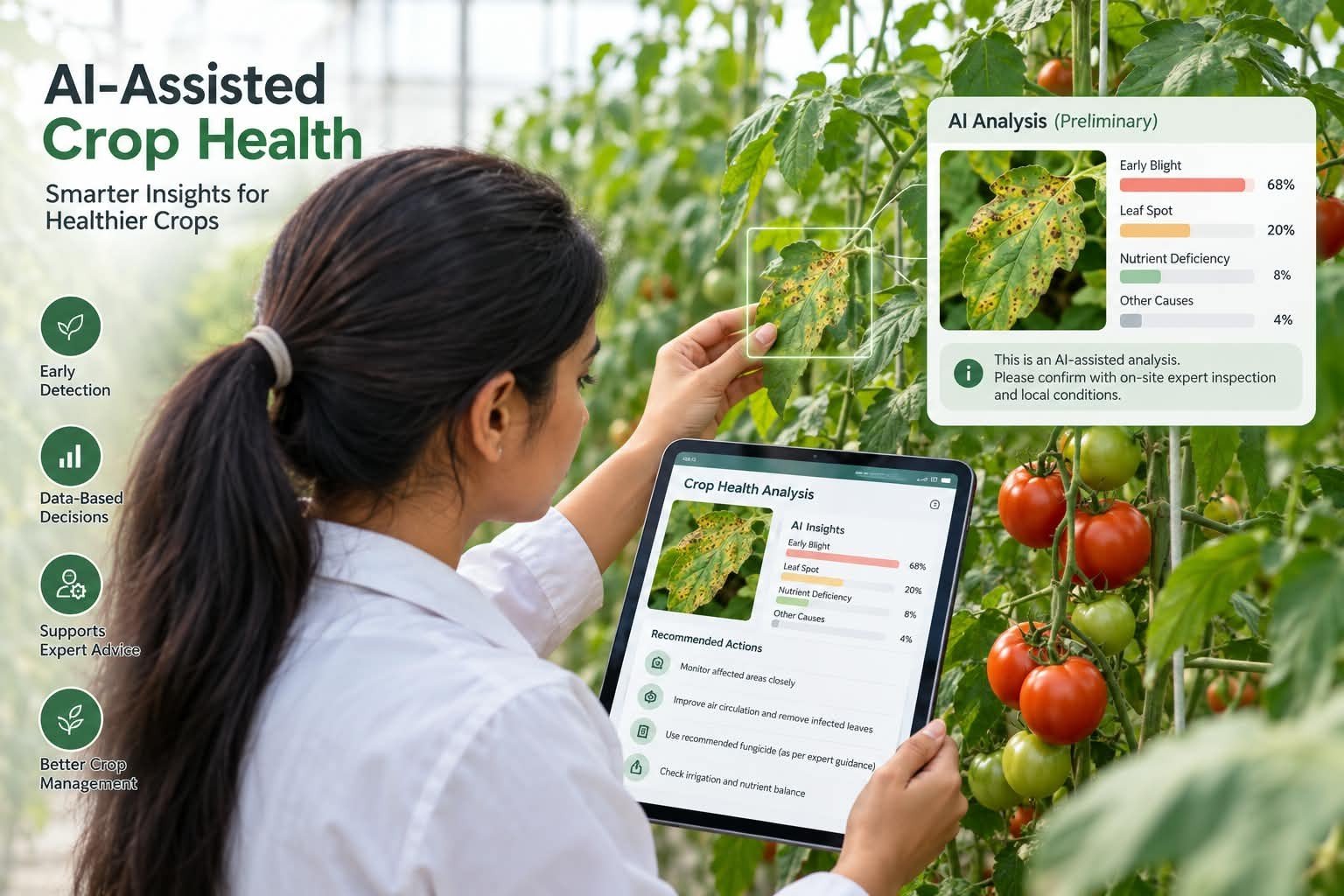
Computer vision allows software to analyse images of plants and identify patterns.
In greenhouse cultivation, image-analysis systems may support the detection of:
Predictive disease-risk models may also use environmental measurements, crop history and weather conditions to estimate whether conditions are favourable for certain diseases.
Production forecasting helps commercial growers plan labour, packaging, transport and market commitments.
AI-based forecasting can combine:
As new observations become available, forecasts can be updated.
How this can help commercial growers?
Yield forecasts are estimates, not guarantees. Disease, pollination, crop management, weather and market conditions can affect actual output.
Greenhouse operating costs include more than seeds, fertilisers and labour. Electricity, cooling, water treatment, equipment maintenance and post-harvest handling also influence financial performance.
Predictive analytics can help growers understand these costs more clearly.
| Operational area | What can be analysed | Potential practical value |
|---|---|---|
| Electricity | Equipment runtime and energy consumption | Identify unusual consumption patterns |
| Irrigation | Water delivery and moisture readings | Investigate inconsistent irrigation |
| Cooling | Temperature trends and cooling-system operation | Evaluate operating efficiency |
| Labour | Crop activities and harvesting records | Improve scheduling |
| Production | Expected and actual harvest | Support planning and performance review |
These tools create value only when their findings lead to useful operational improvements.
AI adoption in India must account for local climate, crop requirements, infrastructure and operating conditions.
A technology designed for a cool climate or a highly automated greenhouse may not perform equally well in a hot, dusty or seasonally humid environment.
For many growers, a sensible starting point is reliable environmental monitoring and irrigation control. More advanced predictive analytics can be introduced as the project’s requirements and operating data develop.
Smart agriculture does not mean every farm must become fully autonomous. It means choosing technology that addresses the farm’s actual needs.
Before selecting a technology provider, farmers should evaluate both technical suitability and commercial feasibility.
AI technology should be evaluated as part of the overall greenhouse business rather than as an isolated purchase.
| Cost or benefit | Questions to evaluate |
|---|---|
| Initial investment | What are the equipment, installation and integration costs? |
| Operating expenses | Are there subscription, maintenance, electricity or calibration costs? |
| Resource savings | Can reduced water, energy or input use be measured? |
| Crop performance | Is there evidence of improved crop management under comparable conditions? |
| Labour efficiency | Does the system save time or improve task planning? |
| Technical support | Are repairs and replacement components accessible? |
| Financial return | Do measured benefits justify the total additional cost? |
A useful evaluation framework is:
Net Economic Benefit = Measured Financial Gains and Cost Savings − Additional Technology and Operating Costs
Revenue is not profit, and potential savings are not guaranteed returns. A credible payback estimate should use documented baseline data, realistic assumptions and sufficient operating history.
AI can improve decision support, but its performance depends on the quality of the complete system.
The best approach combines reliable engineering, validated technology, agricultural expertise and human supervision.
Future greenhouse systems may increasingly combine real-time monitoring, predictive modelling and coordinated automation.
One emerging concept is the digital twin—a digital representation of a physical system that can be updated using real-world data.
In greenhouse cultivation, such a model could represent environmental conditions, equipment and selected crop processes.
It might simulate different ventilation or shading strategies under a forecast weather scenario and help compare their likely effects before a decision is implemented.
These technologies are not all standard commercial features today. Some are available in selected systems, while others remain under development or require specialised integration.
Their future value will depend on reliability, affordability, local suitability and demonstrated performance under real growing conditions.
At Hydrogreen, protected cultivation should be approached as an integrated agricultural project—not simply the installation of a greenhouse structure or a collection of digital devices. A predictive system can deliver value only when the structure, crop, irrigation, sensors and operating practices work together.
Not every greenhouse needs advanced AI from the beginning. A well-designed structure, dependable irrigation and accurate environmental monitoring may be the right starting point before more advanced technology is introduced.
Start with your crop, climate, water availability, infrastructure and investment objectives—not simply the number of automated features.
Contact Hydrogreen Agri Solutions for a project-specific consultation to discuss your protected-cultivation project and evaluate where suitable monitoring, irrigation automation or predictive technology may add practical value.
The future of greenhouse cultivation is not defined by artificial intelligence alone. It depends on how effectively growers combine data, engineering, crop science and practical experience.
Predictive systems can help anticipate environmental changes, improve irrigation decisions, identify potential crop risks and support operational planning.
However, successful implementation requires reliable data, appropriate infrastructure, local validation and responsible human oversight.
For Indian farmers and agripreneurs, the practical path is to identify the most important operational problem, adopt suitable technology, measure the results and expand when the value is demonstrated.
The greenhouse of the future will not necessarily be the one with the most automation. It will be the one that uses the right information at the right time to make better growing decisions.
Hydrogreen’s approach is built around this broader principle: Engineering + Agriculture + Agronomy + Execution.
AI in greenhouse farming uses algorithms to analyse environmental, crop and operational data. Depending on the system, it can support climate forecasting, irrigation decisions, crop-health monitoring, yield estimation and automated control.
It combines sensor readings, historical records and, where available, weather forecasts to estimate future conditions or risks. The system then generates alerts, recommendations or control actions based on its capabilities.
Yes. Suitable systems can coordinate compatible ventilation, shading or cooling equipment. Their performance depends on sensor quality, control design, equipment capacity, crop requirements and safety settings.
Some systems estimate disease risk from environmental conditions, while computer-vision models identify patterns in crop images. Early identification is possible in certain applications, but predictions require validation and should not replace expert diagnosis.
It can be suitable when adapted to local climate, crop requirements, Hydroponics infrastructure, connectivity and budget. Farmers can begin with monitoring and targeted automation rather than investing in a fully autonomous system.
The following sources support the general technical concepts discussed in this article. Technology performance, crop response and financial returns must be validated under the specific location, crop, greenhouse design and management system.
~TANYA TOMAR
(Protected Cultivation Expert)