
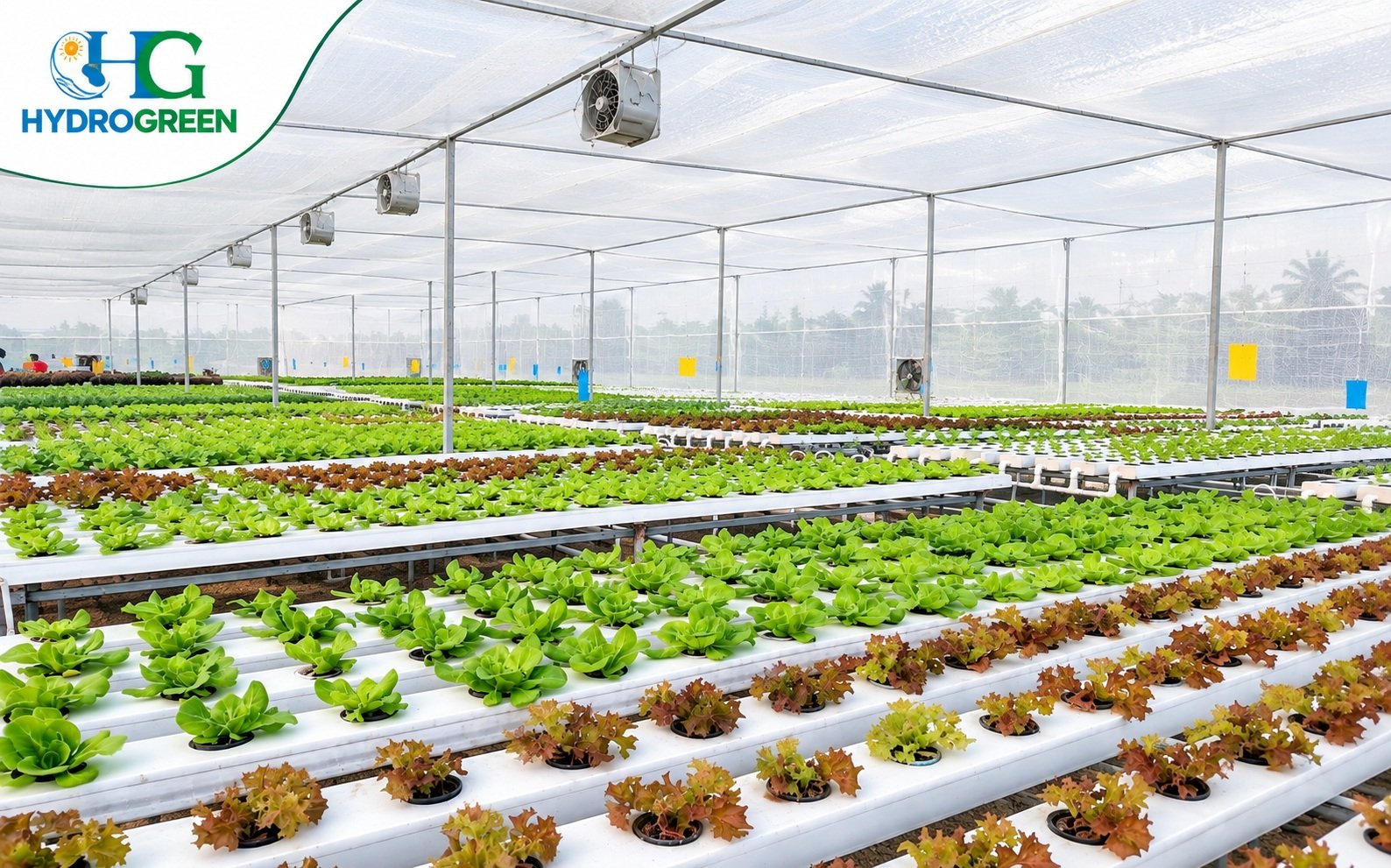
We are a trusted supplier of Nutrient Film Technique, Dutch Bucket System & Cocopeat-Based Soilless Cultivation, structures are designed to support efficient soilless cultivation in a controlled and organized growing environment.
 Request a Call Back
Hydroponics is a soilless cultivation approach in which plants receive water and dissolved nutrients through a designed growing system instead of conventional soil. The system allows growers to manage the delivery of water, nutrients and root-zone conditions with greater precision. Depending on the crop and production objective, different hydroponic configurations can be developed.
Hydrogreen approaches hydroponics as a complete cultivation system, combining growing infrastructure, irrigation, nutrient management and crop requirements.
A hydroponic system generally works through a combination of water, nutrients, root support, irrigation and environmental management.
In Simple Terms
Water + Nutrients + Root Support + Oxygen + Environmental Management = Hydroponic Growing System
Greenhouses | Polyhouses | Shade Net Houses | Tunnels - Smart solutions for a greener tomorrow!
Contact UsHydroponic systems are available in different configurations to suit various crop types, growing spaces, and production requirements. These systems can be customized for efficient water and nutrient delivery, root-zone management, and optimized crop growth.
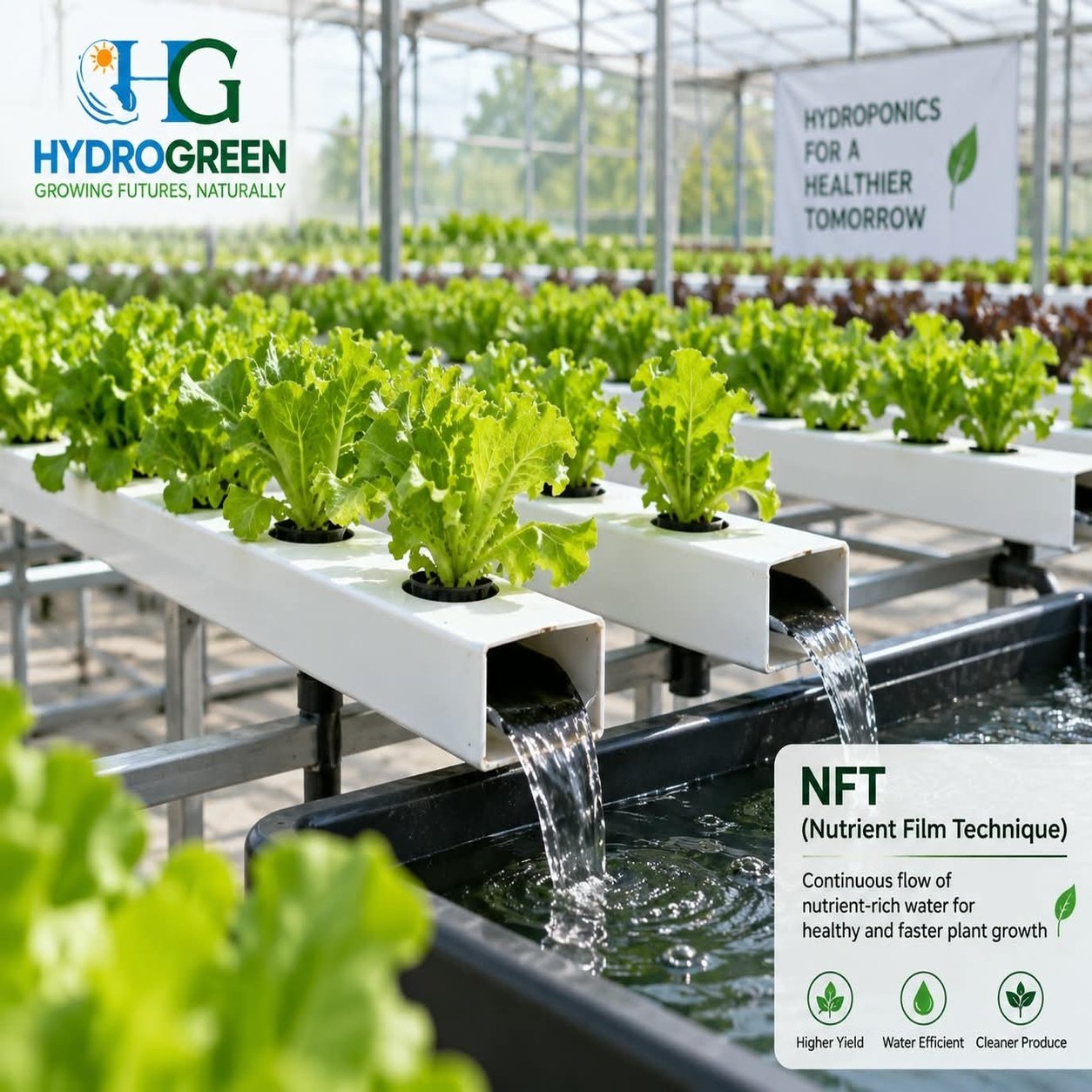
NFT is a hydroponic system in which a thin, continuous flow of nutrient-rich water passes through growing channels to nourish plant roots. It supports efficient water and nutrient use while providing a suitable root-zone environment for healthy crop growth.
The Dutch Bucket System uses individual growing containers filled with a suitable growing medium, allowing plants to receive water and nutrients through a controlled irrigation system. It is well-suited for larger or fruiting crops and supports efficient nutrient management, drainage, and root-zone development.
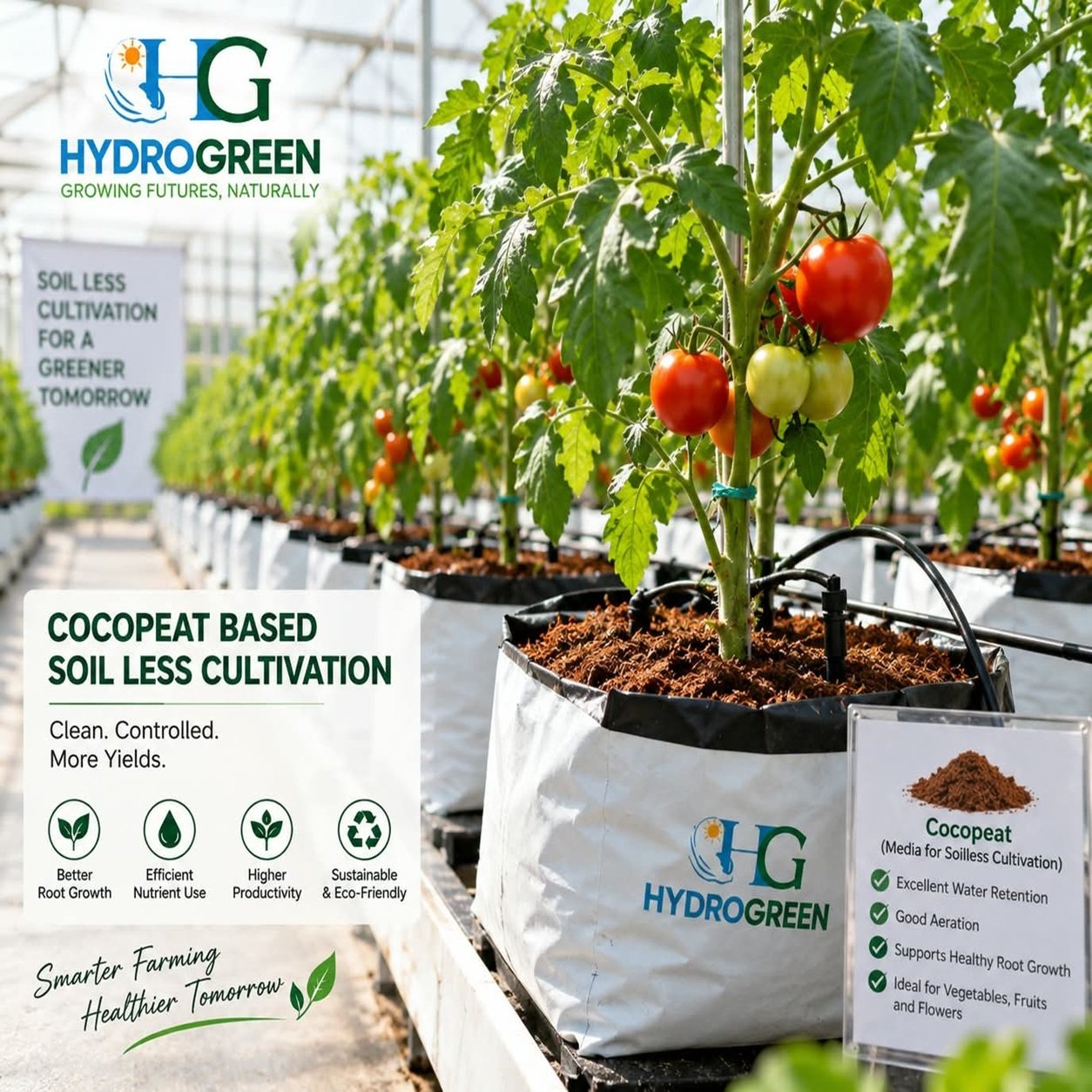
Cocopeat-based soilless cultivation uses cocopeat as a growing medium to support plant roots without traditional soil. It provides good moisture retention, aeration, and root support while allowing efficient delivery of water and nutrients.
Precision irrigation delivers water directly to the plant root zone in a controlled and efficient manner. It helps maintain consistent moisture levels while reducing water wastage and supporting healthy crop growth.
Nutrient Film Technique (NFT) is a hydroponic system in which a thin, continuously moving layer of nutrient solution flows through specially designed growing channels.
Common applications:
Leafy greens • Herbs • Salad crops • Commercial indoor or protected cultivation
Key advantage:
Provides continuous access to water and nutrients while using a compact channel-based layout.
Key Characteristics:
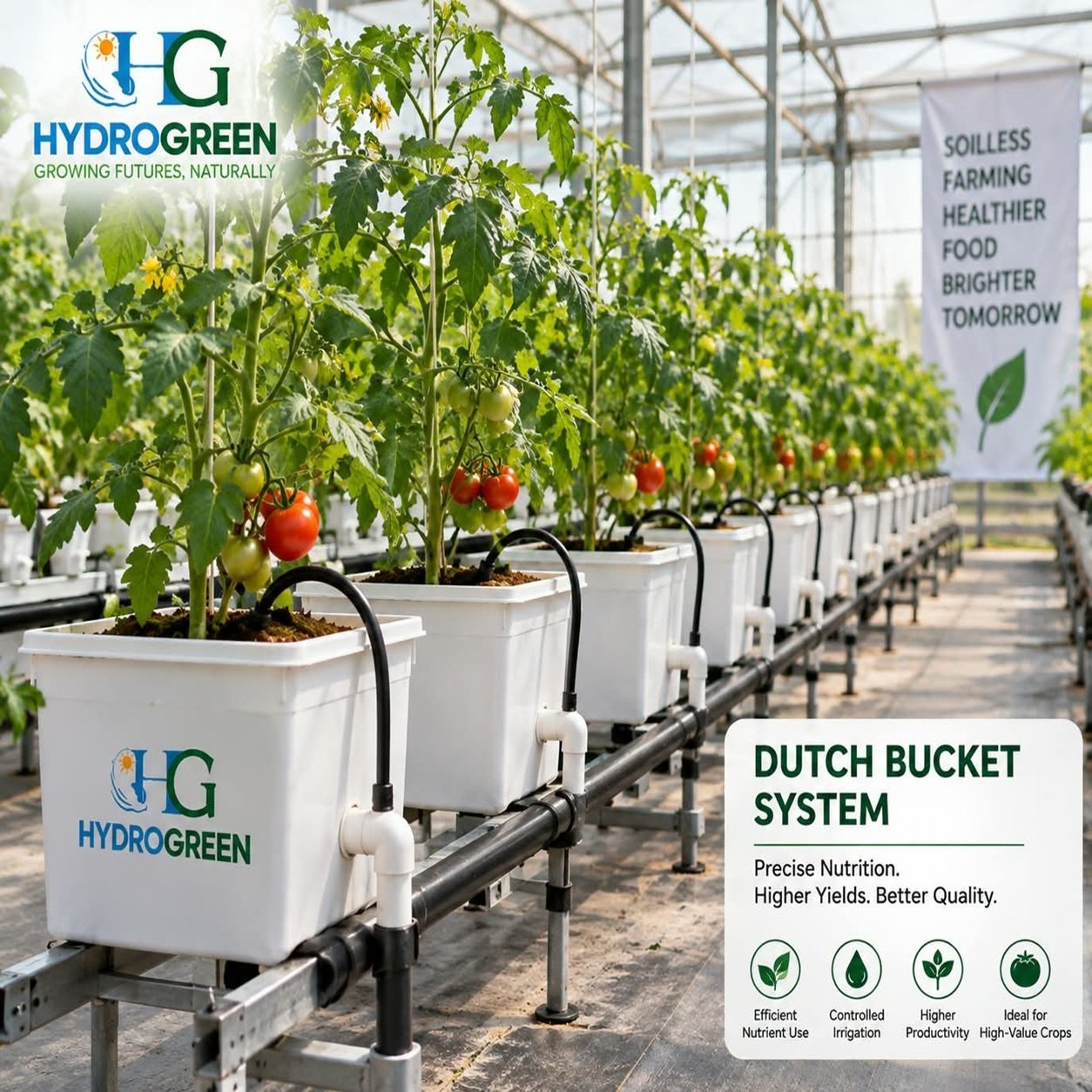
Dutch Bucket is a container-based hydroponic system designed for crops that develop larger root systems and require stronger plant support. Each plant is grown in an individual bucket containing a suitable growing medium. Nutrient solution is supplied to the buckets through an irrigation network.
Common applications:
Tomato • Cucumber • Capsicum • Other vine and fruiting crops
Key advantage:
Provides individual root-zone containers and is well suited to larger, long-duration crops.
Key Characteristics:
Cocopeat-based cultivation uses processed coconut fibre as a growing medium for supporting plant roots. Cocopeat can provide physical support and a suitable root environment while irrigation and fertigation systems deliver water and nutrients to the crop.
Common applications:
Protected horticulture • Nursery production • Fruit vegetables • Soilless cultivation
Key advantage:
Provides a practical substrate-based alternative to conventional soil cultivation.
Key Characteristics:
Suitable Applications
Drip Irrigation:- Deliver water and nutrients with precision—directly to the crop root zone. Drip irrigation is a precision irrigation method that delivers water through a network of pipes, laterals and emitters positioned close to the plant root zone. When integrated with fertigation, the system can also deliver dissolved nutrients through irrigation water. This creates greater control over the timing, distribution and quantity of water and nutrients supplied to crops. Hydrogreen designs irrigation systems around crop spacing, water availability, field layout, cultivation method and project requirements.
Core Irrigation Features
• Root-zone water delivery
• Controlled irrigation scheduling
• Uniform distribution
• Fertigation compatibility
• Filtration systems
• Pressure regulation
• Valves and connectors
• Crop-specific emitter selection
• Modular irrigation layout.
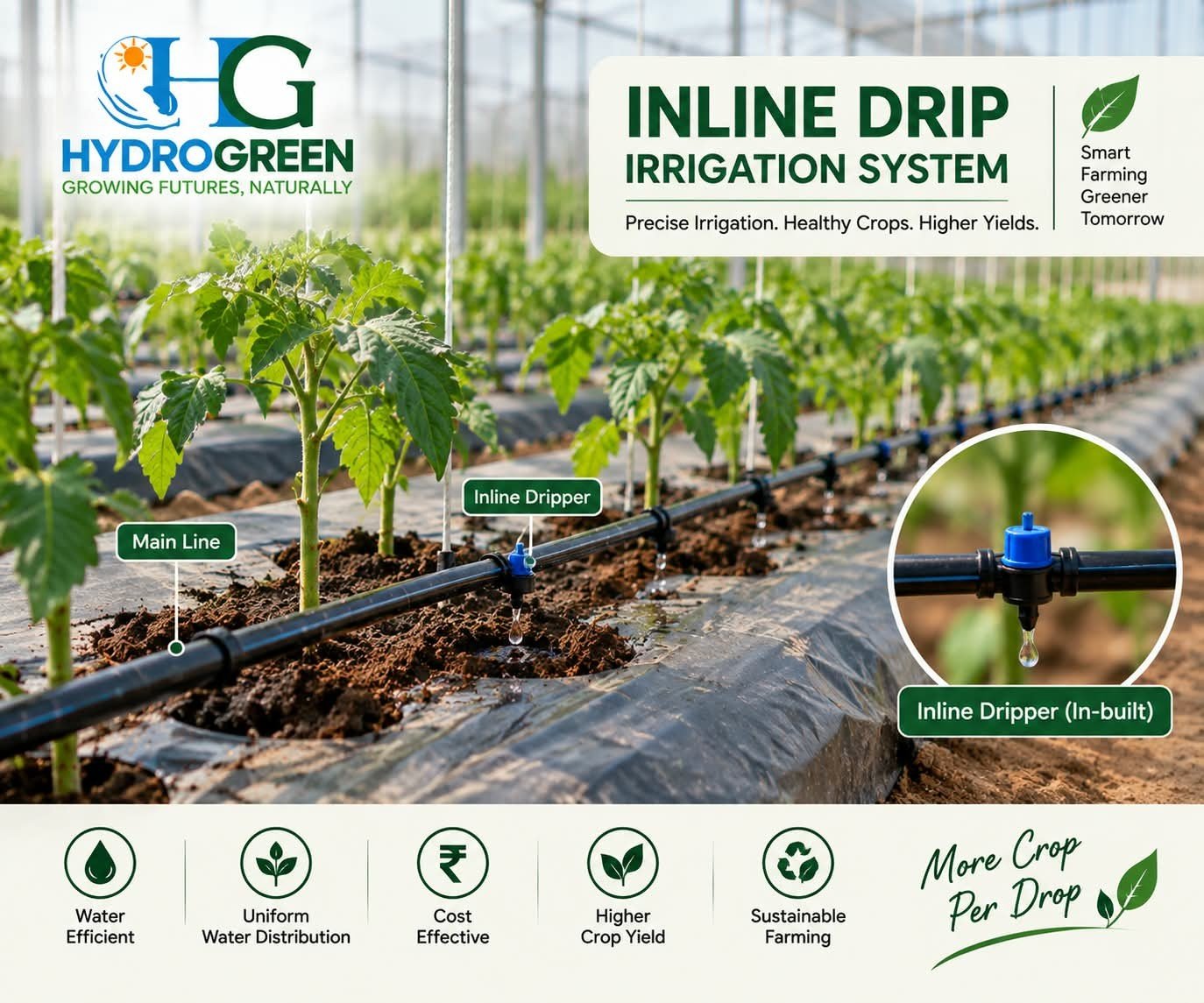
An Inline Drip System delivers water and nutrients directly to the root zone through evenly spaced drip emitters along the irrigation line. It ensures uniform irrigation, reduces water wastage, and supports healthy crop growth with precise moisture management.
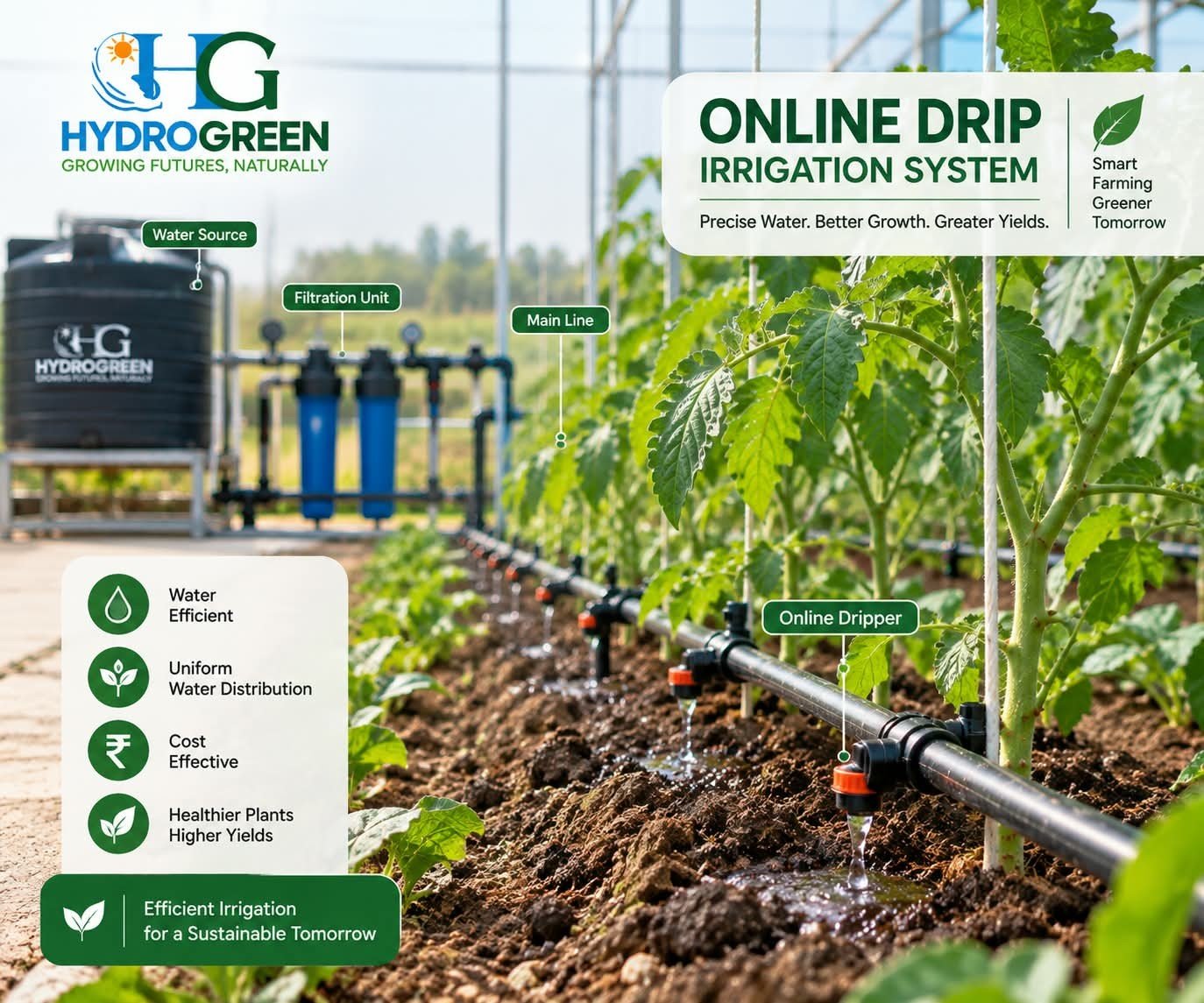
An Online Drip System uses separate drip emitters installed directly on the irrigation pipe to deliver water precisely to each plant. It provides flexible emitter placement, making it suitable for crops with varying plant spacing and water requirements. The system helps conserve water, improve nutrient delivery, and maintain consistent moisture around the root zone.
Key Characteristics:
Key Characteristics:
Quality of products is and always has been our priority, and we are committed to our customer s satisfaction! Here are the facts why our customers prefer us:
We are committed to providing on-time deliveries, high-quality products, and competitive pricing to meet our customers’ requirements. With a modern manufacturing unit, strong distribution network, fair business practices, and a diverse range of quality products, we ensure reliable solutions and consistent value for our customers.
A: Hydroponics is a soilless cultivation method where plants receive water, nutrients, and essential minerals directly through a controlled growing system. It allows precise management of plant nutrition, irrigation, and growing conditions.
A: NFT is a hydroponic system in which a thin, continuous film of nutrient-rich water flows through channels over the plant roots. It provides efficient water and nutrient delivery while using relatively little water.
A: The Dutch Bucket System uses individual buckets filled with a growing medium, with nutrient-rich water supplied directly to each plant. Excess solution is collected and can be recirculated, making it suitable for larger fruiting and vine crops.
A: Cocopeat-based cultivation uses processed coconut fibre as a soil-free growing medium for supporting plant roots. It provides good moisture retention and aeration while allowing precise irrigation and nutrient management.
A: Hydroponic systems can be used for leafy greens, herbs, vegetables, and several fruiting crops. NFT is commonly suitable for leafy crops, while Dutch Buckets and cocopeat systems can support crops such as tomatoes, cucumbers, peppers, and strawberries.
A: Hydroponics can improve water-use efficiency, enable precise nutrient delivery, and support controlled crop production. Since plants are grown without conventional soil, the system can also be used in locations where suitable agricultural soil is limited.
A: The right system depends on the crop type, plant size, available space, water and nutrient requirements, and production scale. NFT, Dutch Bucket, and cocopeat systems each have different growing-media, irrigation, and crop-support requirements.